The Future of Web Development: Where Are We Heading in the Next Decade?
The internet is a living, breathing ecosystem that never stops evolving. If we look back just ten years, the way we built and interacted with websites was fundamentally different. Today, we are standing at the edge of a massive technological shift. The boundaries between web applications, native mobile apps, and artificial intelligence are blurring faster than ever before.
If you are a developer, a business owner, or a tech enthusiast wondering where web development is heading, you are in the right place. In this comprehensive guide, we will dive deep into the technologies, frameworks, and methodologies that will define the future of the web.
1. The Artificial Intelligence (AI) Revolution in Coding
Artificial Intelligence is no longer just a buzzword; it is actively reshaping how developers write code and how users experience the web. The future of web development is heavily intertwined with AI and Machine Learning (ML).
AI as the Ultimate Pair Programmer
We have already seen the rise of tools like GitHub Copilot, ChatGPT, and Claude. In the future, developers will not spend hours writing boilerplate code or debugging syntax errors. Instead, AI assistants will act as hyper-intelligent pair programmers. You will write the architecture and business logic, and the AI will generate the components, write unit tests, and even suggest performance optimizations in real-time.
Generative UI and Personalized Experiences
Currently, we design static user interfaces (UI) that look the same for everyone. In the future, Generative UI will take over. Websites will use AI to analyze a user's behavior, preferences, and device in real-time, dynamically generating a unique layout and content specifically tailored for that individual. The web will transition from a "one-size-fits-all" approach to hyper-personalized digital experiences.
2. The Dominance of Meta-Frameworks (Next.js, Nuxt, SvelteKit)
The days of building purely Client-Side Rendered (CSR) applications using vanilla React or Vue are fading. The future belongs to Meta-Frameworks like Next.js, Nuxt.js, and SvelteKit.
Why Next.js is Leading the Charge
Since you are using Next.js, you are already ahead of the curve. Meta-frameworks solve the biggest problems of traditional Single Page Applications (SPAs): poor SEO and slow initial load times.
- Server-Side Rendering (SSR) & Static Site Generation (SSG): These frameworks allow pages to be pre-rendered on the server, serving pure HTML to the browser. This results in blazing-fast load times and perfect SEO scoring.
- React Server Components (RSC): Introduced recently in Next.js, Server Components allow developers to render parts of the UI exclusively on the server, drastically reducing the amount of JavaScript sent to the client's browser. This makes web apps lighter and faster, especially on low-end mobile devices.
In the future, the line between the frontend and backend will continue to blur, and meta-frameworks will be the standard tool for building full-stack web applications.
3. WebAssembly (Wasm): Breaking the JavaScript Monopoly
For decades, JavaScript has been the undisputed king of the browser. While it is incredibly powerful, it has performance limitations when it comes to highly intensive computational tasks. Enter WebAssembly (Wasm).
What is WebAssembly?
WebAssembly is a binary instruction format that allows code written in robust backend languages like C++, Rust, Go, and Python to run natively inside the web browser at near-native speed.
The Impact on the Web
Because of Wasm, we are now seeing desktop-grade applications moving entirely to the browser. Tools like Figma (design), AutoCAD (engineering), and even complex 3D video games can run smoothly on a web page without requiring heavy downloads or installations. In the future, JavaScript will still handle the UI and DOM manipulation, but WebAssembly will be used under the hood to handle heavy data processing, video editing, and AI models directly in the browser.
4. Edge Computing and Serverless Architecture
The physical location of your servers matters. If your server is in New York, a user visiting your site from Dhaka will experience latency (delay) because the data has to travel halfway across the globe. Edge Computing solves this.
Moving to the Edge
Instead of hosting your website on a single, centralized server, Edge Computing distributes your application logic across a global network of servers (like Cloudflare or Vercel Edge Network). When a user requests a page, the code executes on the "Edge node" that is physically closest to them.
Serverless Databases
Alongside Edge functions, we are seeing a massive shift toward Serverless Databases (like Supabase, PlanetScale, or Neon). Developers no longer need to provision, manage, or scale database servers manually. The database scales automatically based on traffic and charges only for what you use. The future of web infrastructure is completely serverless, infinitely scalable, and globally distributed.
5. The Transition to Web3 and Decentralization
While "Web3" has seen its fair share of hype and volatility, the underlying technology—blockchain and decentralized networks—will play a significant role in the future of the internet.
Ownership and Privacy
Web 2.0 is dominated by massive tech monopolies that control user data. Web3 aims to give power and ownership back to the users. In the future, we may see a wider adoption of dApps (Decentralized Applications) running on peer-to-peer networks rather than centralized servers like AWS or Google Cloud.
Furthermore, decentralized identity systems could replace traditional email/password logins, allowing users to authenticate across the web using a secure, private digital wallet without handing over their personal data to corporations.
6. API-First Design and Headless Architecture
Monolithic architectures (where the frontend, backend, and database are tightly coupled together in one massive codebase, like traditional WordPress) are becoming obsolete for enterprise scaling. The future is Headless.
What is Headless Architecture?
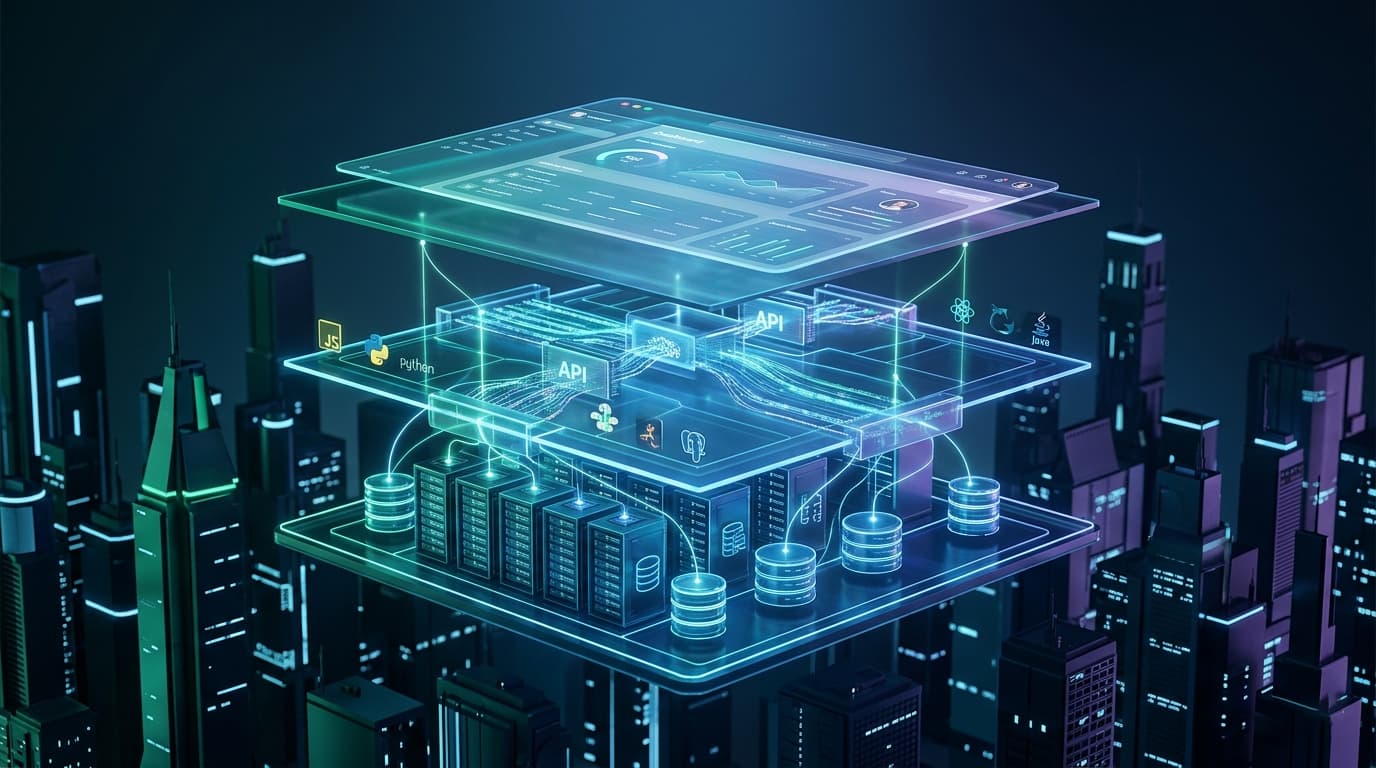
In a headless setup, the frontend (what the user sees, e.g., your Next.js site) is completely decoupled from the backend (where the content or data lives). They communicate entirely via APIs (REST or GraphQL).
Omnichannel Delivery
This API-first approach means a company can use a single Headless CMS (like Sanity, Strapi, or Contentful) to manage their content, and then distribute that exact same content to a Next.js website, an iOS mobile app, a smartwatch app, and a digital billboard simultaneously. It provides ultimate flexibility for developers and content creators.
7. Zero-Trust Cyber Security in Web Development
As web applications become more complex and handle more sensitive data, cyber security is no longer an afterthought—it is a foundational requirement from day one.
DevSecOps and Modern Threats
With the rise of automated AI-driven cyberattacks, developers must adopt a "Zero Trust" architecture. This means never trusting any user, device, or API call by default, even if they are already inside the network. Security testing will be completely integrated into the CI/CD pipeline (DevSecOps), ensuring that code vulnerabilities are caught and patched automatically before the website is ever deployed to production.
Conclusion: The Evolution of the Developer
So, will AI replace web developers? The short answer is: No. However, developers who use AI will replace developers who do not. The role of a web developer is shifting from simply "writing syntax" to becoming a Product Engineer or System Architect.
The future web developer needs to understand how to orchestrate various APIs, manage cloud infrastructure, prompt AI tools efficiently, and focus heavily on User Experience (UX) and accessibility. The tools are getting smarter, which means we can build faster, more secure, and more incredible digital experiences than ever before.
The future of web development is bright, blazing fast, and highly intelligent. The only question is: are you ready to build it?
What excites you the most about the future of web development? Are you already using AI tools or Edge computing in your projects? Let us know your thoughts in the comments below!